
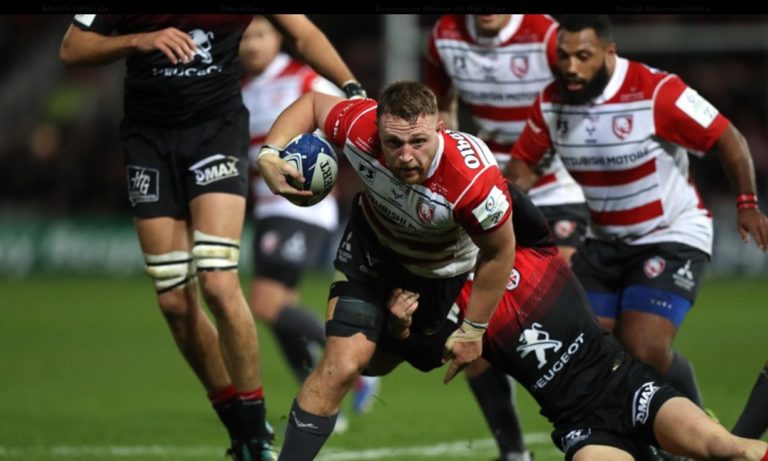

For 57 minutes on Tuesday night, Gloucester had done a job on fierce West Country rivals Bath at The Rec.
A defensive masterclass and some clinical finishing saw them lead 20-3 approaching the final quarter of the match.
It was some performance from the 11-point underdogs and Bath’s play-off hopes looked in tatters.
But as Cherry & Whites fans know only too well, it ain’t over until it is over, not when their team is concerned.
Only when Craig Maxwell-Keys sounded the final whistle and they were still in front would they celebrate.
When the official did call time, the scoreboard read Bath 31 Gloucester 20. Even by their standards, it took some believing.
After shutting out Bath for an hour, they shipped four tries and 28 unanswered points in the last quarter.
Fisher price
Gloucester’s reputation as ‘bottle jobs’ goes back to the days of Laurie Fisher, the Australian famously resigning via twitter in March 2017 after watching his side let another game that appeared to be all wrapped up unravel before his very eyes.
While Fisher has long since gone and Johann Ackermann and now George Skivington have taken over as the men in charge, the malaise lingers on.
The Rec capitulation was the sixth time this season that they have let a lead slip in the last half an hour of matches.
Twice in Europe – against Toulouse and Connacht – they were in the box seat heading into the latter stages only to shoot themselves in the foot, while league games against Leicester, Harlequins and Sale, and now Bath, were theirs for the taking.
Had those points not been dropped, it could be Gloucester not Bath looking at an extended end to the season.
Given the trend has happened under a succession of Directors of Rugby/Head Coaches, it suggests the blame lies with the players, or certainly the on-field leadership group.
For leading sports psychologist, David Charlton, fear of history repeating itself could be the one of the key reasons why Gloucester fall so regularly when the winning line is in sight.
“From an individual point of view, you could be full of energy in the changing room, the music is blaring and you’re full of aggression. But then at some point in the match, there’s a mind shift where you’re maybe flitting between the past – and having worrying thoughts like ‘here we go again’ – and the future, which in this case could be the scoreboard and how long is left, rather than focusing on the job in hand,” Charlton said.
“The players are better off staying in the present and taking it one play at a time. As a psychologist, you want to get them back on the front foot and being in people’s faces again rather than be hampered by fear.”
Holing out
Scottish professional golfer Tim Higson had a similar problem to Gloucester in being unable to finish off the job.
But after some mindfulness sessions with Charlton, Stirling-based Higson claimed the most recent PGA Championship title at Royal Dornoch.
“It was very similar in a way with Tom, he’d be -4 or -5 after 14 holes, but he had this fear of going lower,” said Charlton.
“We did some exercises where I encouraged him to stay present, take in the scenery of the golf course to stop him having negative thoughts and he won the tournament.”
Fixing Gloucester’s throwaway culture may take a different approach but until the club finds the solution, the undoubted talent they have in their squad won’t be reflected in silverware.