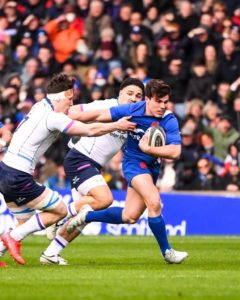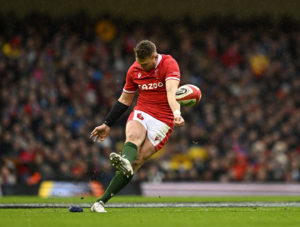


Tempted to cash out or throw your betting slip in the bin if a player gets yellow carded in a match? Think again.
It’s a commonly held misconception, sometimes perpetuated by TV pundits, that the sin-bin period is worth seven points to the opposition.
Rugby’s equivalent of the naughty step has been around since 1997, to act as a deterrent against foul play.
However, data from World Rugby covering the main international and cross-border club competitions over the past year suggests it is no longer serving its purpose.
The common assumption that there is a seven-point net gain for the team who has the man advantage is wide of the mark.
Zero Advantage
In the last editions of the Rugby World Cup 2019, the Six Nations and The Rugby Championship there was only a two-point net swing during the 10 minutes of the sin-bin, and in just over half the matches in Japan (51%), there was no advantage at all.
Meanwhile, in the two European competitions, the Champions Cup and Challenge Cup, the net gain was twice as high but still less than the value of an unconverted try.
Former England head coach Brian Ashton believes this is an indictment not of the sin-bin itself but of the attacking skills and mindset of the team temporarily playing with 15 men against 14.
“If a team in 10 mins can’t get scores on the board playing against a man down, then you just wonder why they are even bothering to be honest,” said Ashton, now working in football as a coach mentor.
“It doesn’t mean the system should be changed, it is nothing to do with the system, it’s the people playing and coaching the game.
“You get odd flashes with odd teams who suddenly break free and try and play rugby and are confrontational – not just physical but in every way, mentally and tactically and technically as well.
“There are players dotted around the Premiership who can do that but by and large a lot of it, in my eyes, anyway, is relatively predictable.
“You can almost commentate on what’s going to happen five seconds in advance if you know the game. I’m desperate for the time when I think, ‘Jesus, I’ve not seen that before from that position.’”
Waste of Space
Ashton, one of the foremost thinkers in attacking rugby over the past four decades, cites poor skills execution, a lack of game intelligence and a negative mindset as some of the reasons for the sin-bin’s lack of effectiveness.
“A few things spring to mind and the first is the inability of the team to execute and make use of the extra player,” he said. “The space could be anywhere – it could be in the middle of the field, close to the ruck, behind the defence, out wide – but the skills are not good enough to execute that.
“There is also a lack of real-time game intelligence. Teams follow game plans but once the picture and scenarios change, they are not adaptable or smart enough to take ownership of it.
“You look back and think how did teams prepare to play games. Did they prepare for scenarios such this? I’m pretty sure a lot of teams don’t, and if they do, I’m pretty sure it’s way down on the shopping list.
“I know a lot of teams practice how they are going to operate when they are a man down, but I just wonder how many practice, on a regular basis, what they are going to do if they have an extra man.
“I think game ownership is way down the list of priorities in terms of coaching. Following a game plan is high but, as we all know, and a Russian general told us this four centuries ago, no game plan survives the first contact with the enemy.”
Must try harder
Ashton also feels that teams need to flip their negative mindset on its head and be bolder in their approach.
“I actually feel that a lot of teams I’ve been involved with and watch now, their overarching mindset is not conceding points and not losing games, rather than saying, we’re going to outscore the opposition.
“If you have the mindset to play to win by scoring tries, that could be pretty useful when you have an extra man.”
Ashton, now 73, would also like to see the laws applied better, to encourage attacking rugby.
“When are we going to find a referee who referees the offside line? It’s ridiculous at the moment, players live offside all the time,” he bemoaned.
“The ones that are glaringly obvious are the ones in the wider channels, from 13 outwards, from box kicks. Very often, the blindside wing or the guy on the blindside chasing the box kick, is miles in front of the kicker by time he kicks it. It’s not policed at all. God knows what the nearest touch judge is doing.”
Glos to take advantage
One Premiership club bucking the overall trend is Gloucester who, for the last two seasons, have been the best-performing team in a 15 v 14 scenario, according to independent data from HillSport Media. Nine of their rivals gain fewer than five points on average in the 10 minute spell.
Before the enforced break for the coronavirus pandemic, Gloucester gained an average of 10.32 points in the current 2019/20 stop-start Premiership campaign, a figure boosted by the 19 points they put on Worcester when Ryan Mills was sat on the sidelines on their way to a 36-3 victory back in December.
With Danny Cipriani pulling the strings and manipulating the extra space created by the sin-bin plus a plethora of brilliant broken-field runners in their back-three, it is probably no surprise that the Cherry & Whites are the most clinical team in this respect.
“We have lots of scenario-based drills in training, and it’s also down to the boys, when they are out there, being able to recognise who has gone off and where we could potential exploit that extra space and hurt teams,” said attack coach Tim Taylor.
“Teaguey (skills coach Rory Teague) has done a lot of work within the attack as well, on counterattack and turnover ball, and with the back-three we’ve got, with a fair bit of pace in there, we’re pretty dangerous there.
“Danny (Cipriani) has got an excellent ability to see the space and play to it, so we are very fortunate to have someone like him.”
Even before the controversial addition of homecoming hero Jonny May, Gloucester’s back-three stock included exciting players such as young Wales sensation Louis Rees-Zammit, Tom Marshall, Jason Woodward, Matt Banahan, Charlie Sharples, Ollie Thorley, Tom Hudson and Tom Seabrook.
“I actually played with Jonny, it’s great to have him back,” said Taylor, a member of Gloucester’s 2011 LV= Cup-winning side.
“He is an experienced international player, one of the best wings in the world. We’ve got a lot of young wingers coming through, so he’ll be an excellent example for them to follow.”
What's the effect on the scoreboard
The following table shows the percentage of no points benefit and the average points benefit for the team with 15 players per competition.
RUGBY WORLD CUP | 6N / TRC | WOMENS 6N | EPCR | SUPER RUGBY | |||||
No points % | Net | No points % | Net | No points % | Net | No points % | Net | No points % | Net |
50% | +2 | 53% | +2 | 33% | +4 | 39% | +4 | 50% | +3 |
*Data provided by World Rugby